Before You Recruit Another Physician, Is Your Practice Ready to Support One?
Healthcare Industry News | Tips for Recruiters
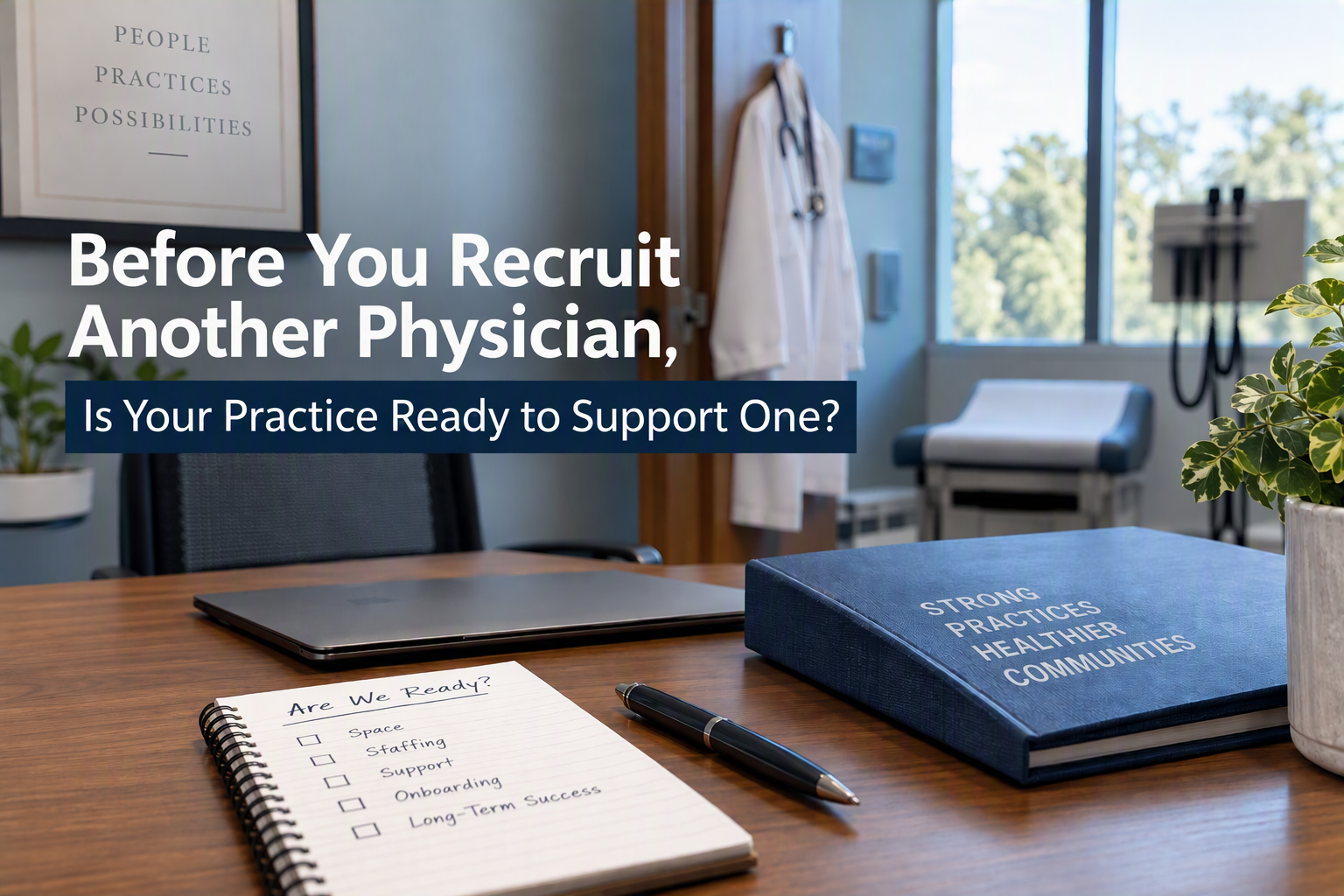
When a medical group or health system decides it needs another physician, the natural next step is to start recruiting.
But there is an important question that should come first:
Is the practice actually ready for another physician?
A successful permanent physician search requires more than identifying qualified candidates. Before beginning the search, healthcare organizations need a clear understanding of why they are hiring, what the incoming physician will inherit, and whether the practice has the infrastructure to support that person once they arrive.
Otherwise, an organization can spend months recruiting the right physician only to discover that the underlying practice was not prepared for the hire.
Start With Why You Need Another Physician
The need may seem obvious. Patient volume is increasing. An existing physician is leaving. Access is becoming difficult. The organization is expanding into a new market or service line.
But those situations can create very different searches.
Before recruiting, leadership should clearly define what problem the new physician is expected to solve.
Is the goal to:
- Replace a departing physician?
- Reduce patient wait times?
- Increase access in an underserved market?
- Support physicians carrying unsustainable patient volumes or call responsibilities?
- Build or expand a service line?
- Prepare for a physician’s upcoming retirement?
- Support broader organizational growth?
The answer influences nearly every part of the search, from specialty and experience requirements to compensation, schedule, call expectations, and the type of physician who will fit the practice.
The clearer that need is internally, the easier it becomes to conduct a focused search.
Look at the Practice the Physician Will Actually Join
It is easy to concentrate on what you want from a new physician. It is equally important to examine what your organization is prepared to provide.
Before opening the search, look realistically at the day-to-day practice environment.
Consider questions such as:
- Is there enough clinical and administrative support?
- Are staffing levels appropriate for another physician?
- Will the physician have adequate exam, procedure, or office space?
- How will patient volume be built or distributed?
- What will call coverage look like?
- Are referral relationships already in place?
- Is APP support available where appropriate?
- Are workflows established, or will the new physician be expected to help build them?
- Who will help the physician navigate the organization during the first several months?
These details should not be treated as secondary considerations. They determine what the job actually looks like once the physician starts.
They can also expose problems that are better addressed before recruiting begins rather than after a physician has signed.
Make Sure Leadership Agrees on the Position
Permanent physician recruitment can become difficult when different people within an organization have different ideas about whom they are trying to hire.
Administration may envision one type of candidate while the department chair wants another. Existing physicians may have different expectations for call coverage, scheduling, procedures, or patient mix. Compensation parameters may still need approval.
Those disagreements do not disappear once recruiting starts. They usually surface later, often when an organization is already trying to move a candidate through the process.
Before launching a search, the key stakeholders should agree on the fundamentals:
- Specialty and training requirements
- Clinical responsibilities
- Schedule
- Call expectations
- Compensation structure
- Partnership or ownership opportunities, when applicable
- Leadership responsibilities
- Experience requirements
- Interview and approval process
Not every preference needs to become a firm requirement. In fact, making a search too narrow can unnecessarily restrict the candidate pool. The goal is to distinguish between what the organization truly requires and where it can be flexible.
Know What the First Year Will Look Like
Organizations often spend considerable time defining the position but much less time thinking about what happens after the physician accepts it.
For a permanent hire, that matters.
What will the physician’s patient volume look like in the first several months? How quickly is the physician expected to build a full schedule? Who will introduce the physician to referral sources? How will call be incorporated? What resources are available if operational problems develop?
A defined onboarding plan gives the incoming physician a clearer path into the practice and gives leadership a way to establish realistic expectations from the beginning.
This is particularly important when recruiting for a newly created position. A physician replacing someone with an established patient panel is stepping into a very different situation than someone being asked to build a practice from the ground up.
If the organization cannot clearly explain that distinction, it may not be ready to take the position to market.
Consider Whether the Position Is Sustainable
Recruitment should solve a long-term staffing need, not simply provide temporary relief for an underlying problem.
If physicians are leaving because of excessive call, inadequate support, inefficient workflows, unrealistic productivity expectations, or other structural problems, replacing them without addressing those issues creates the risk of repeating the same cycle.
Before recruiting another physician, ask:
If we successfully hire this person, what will make them want to build their career here?
That question changes the conversation from filling a vacancy to building a position that can work over the long term.
It may lead to changes in staffing, scheduling, call distribution, onboarding, leadership involvement, or other parts of the practice before the search begins.
Be Prepared to Move When You Find the Right Physician
Internal preparation also matters once candidates enter the process.
Organizations should determine ahead of time who needs to participate in interviews, who has authority to make decisions, how compensation will be approved, and what has to happen before an offer can be made.
Without that preparation, even a strong search can lose momentum.
A previous Enterprise Medical Recruiting article discussed how internal approvals, interview coordination, compensation reviews, and other delays can extend the hiring process. Preparing these pieces before starting the search gives an organization a better chance of moving decisively when the right candidate is identified.
Recruitment Starts Before the Search
A permanent physician search should not begin with a job posting or a list of potential candidates.
It should begin with the practice itself.
Healthcare organizations that understand their need, align leadership, evaluate their support structure, and define what the physician’s first year will look like enter the market with a much clearer story.
That preparation also allows a recruiting partner to represent the position accurately, identify physicians who fit what the organization truly needs, and have more meaningful conversations with candidates from the beginning.
Before you recruit another physician, take an honest look at what you are recruiting them into.
Finding the right physician matters. Making sure you are ready for that physician matters just as much. Enterprise Medical Recruiting can help you take the next step by building a permanent search around your practice’s needs, priorities, and the type of physician who can succeed there long term.
Share This Article
Related Articles